Physical Address
304 North Cardinal St.
Dorchester Center, MA 02124
Physical Address
304 North Cardinal St.
Dorchester Center, MA 02124

Objectivity, Perseverance & Reliability
Objectivity, Perseverance & Reliability
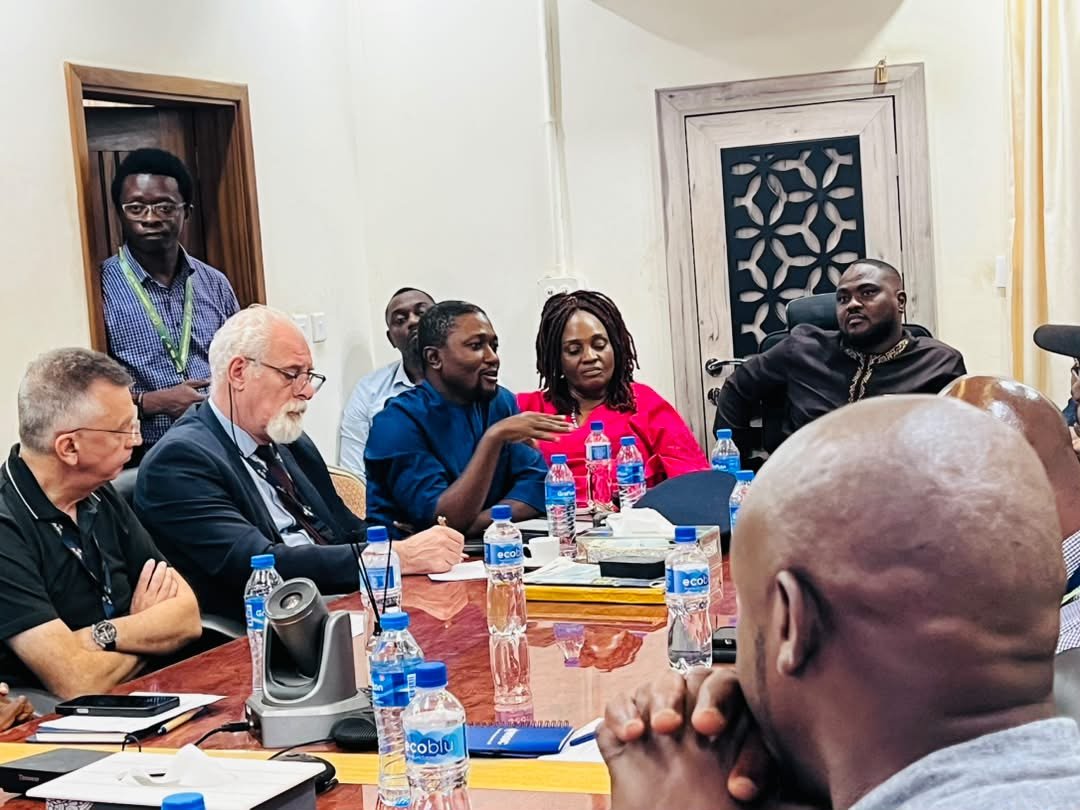
Yankuba Askia Bio, director-general of the Sierra Leone Ports and Harbours Authority (SLPHA), has refuted claims published by The Economist alleging unauthorized removal of containers from the Port of Freetown, labeling it as “utterly false” with intent to tarnish the image of the country.
These allegations form part of an investigation published by The Economist in September 2026, which examined the reported presence and operations of wanted Dutch drug trafficker Jos Leijdekkers within Sierra Leone. The report claims that containers were allowed to bypass standard scanning procedures before being hauled away from the port complex at night.
These claims, according to The Economist, were made by someone whom they met in a bar.
Addressing journalists during a press briefing in Freetown, Ports DG Yankuba Bio dismissed the reporting as “completely false and malicious,” asserting that it was structured specifically to impugn his reputation.
Crucial to Bio’s defense is the timeline of his tenure. While The Economist alleged that these irregularities took place around late 2022 during Bio’s tenure as director general, Bio emphasized that he did not hold the position at that time.
“I was not in office in 2022,” Bio stated. “I took up office in October 2023”.
Official records confirm Bio’s timeline. Parliamentary records show that the Sierra Leone Parliament formally confirmed his appointment as Director General of the Sierra Leone Ports Authority on October 24, 2023, alongside Deputy Director General Judith Kosseh.
He further disputed the characterization of port operations, clarifying that round-the-clock operations at the Freetown port commenced in 2026 as a direct response to a marked rise in cargo traffic.
SLPHA data indicates that current monthly throughput stands at roughly 8,670 containers. Figures shared at the briefing highlight a sharp growth in container handling over a three-year span.
For instance, full transit volumes expanded from 1,029 TEUs (20-foot containers) in 2023 to 2,294 TEUs in 2024, reaching 3,286 TEUs in 2025, reflecting a reported surge of 219 percent across that timeframe.
Exports of full TEUs likewise expanded by approximately 40 percent, climbing from 12,661 TEUs in 2024 to 17,750 TEUs in 2025.
Imported volumes rose from 68,227 TEUs in 2023 to 75,619 TEUs in 2024 and 82,609 TEUs in 2025, yielding an average yearly growth rate of about 11.3 percent.
This upward trajectory aligns with broader reports regarding the Port of Freetown. In September, NaCSA Commissioner Ernest Mbaimba Ndomahina commended the facility’s ongoing modernization and structural upgrades, while Bio credited these achievements to joint efforts among the SLPHA, government bodies, and private sector partners.
Bio additionally utilized the press briefing to detail the evolution of the Port of Freetown’s operational model.
He noted that SLPHA moved from a service-port to a landlord-port model in 2011, when containerized cargo operations were concessioned to Bolloré Logistics, now operating as Freetown Terminal Limited (FTL).
Under this structure, Bio explained that SLPHA furnishes the regulatory framework and infrastructure, leaving specialized private partners to manage specific daily operational functions.
The SLPHA delineated its core responsibilities as maintaining regulatory oversight, providing infrastructure, coordinating stakeholders, supervising safety and security, and fostering a conducive business environment for port operators.
Bio explained further that SLPHA does not directly execute all hands-on operational tasks related to container handling, scanning, and transport.
Representatives from various port operators present detailed their respective operational mandates.
Cargo Tracking: Logistics Services Solutions (LSS) monitors cargo journeys from the point of loading to final discharge in Freetown.
Scanning & Inspection: Integrated Trade Services (ITS) conducts scanning and quality inspections for containerized imports and exports.
Bulk Cargo Management: Nectar Sierra Leone Bulk Terminal (NSBT) oversees non-containerized bulk and break-bulk goods, alongside consolidated cargo handling.
Vessel Labor & Haulage: Stevedoring entities deliver vessel labor independent of SLPHA, while quay transport is operated by the Indigenous Transport Owners Association and private companies.
Customs Enforcement: A senior customs representative clarified that customs authorities focus on collecting government revenue while ensuring trade compliance with statutory regulations.
To improve intelligence capabilities and prevent the entry of illicit drugs and contraband, Bio highlighted that port security has been bolstered through upgraded technology, specialized training, and closer inter-agency coordination.
As part of these ongoing security upgrades, new patrol vehicles have been acquired, and 69 security officers are presently undergoing professional training.
Addressing questions regarding cocaine, Bio and terminal operators stated unequivocally that no cocaine has ever been discovered within or around the port facility.
However, SLPHA disclosed that enforcement operations at the port have led to the seizure of over 1,400 cartons of tramadol and counterfeit pharmaceuticals since January 2026, all of which were transferred to the police for testing and destruction.
Yankuba Bio called on international news organizations and foreign journalists to consult with the SLPHA and other relevant government bodies for official responses before publishing claims about the country’s maritime hubs.
Reaffirming SLPHA’s commitment to transparency, he invited the press to engage the SLPHA directly to verify details prior to publication.
For SLPHA to address these claims, he said, is essential not only to set the records straight but also to protect the image of Sierra Leone’s primary commercial trade hub during a period of expanding cargo traffic.